


Search the site

Surfer SEO Alternatives and Competitors Changing How Content Gets Optimized

Surfer SEO remains one of the most recognized names in content optimization, especially for teams that rely on SERP-based guidance. But as SEO workflows diversify, so does the toolset. Search behavior, content formats, and how people actually write and update pages have continued to evolve. That is why more teams are evaluating Surfer SEO alternatives and competitors to better match their workflows.
This guide looks at tools that approach content optimization from different angles. If Surfer SEO already works for you, these platforms may complement it. If you are reassessing your stack, they offer practical options built for how SEO is done today. Either way, the goal is clarity, not comparison for the sake of comparison.
What Surfer SEO Is Built to Do
Surfer SEO is designed to turn search result patterns into practical writing guidance. It analyzes pages that already rank for a keyword and translates those signals into clear recommendations writers can apply while creating or updating content.
With 68% of online experiences starting on a search engine, the platform focuses on on-page optimization. Inside its editor, users see live suggestions for keyword usage, headings, content depth, and topical relevance. These recommendations update as content changes, helping teams stay aligned with search intent without overthinking every decision.
Surfer SEO also supports content audits and planning, helping teams identify pages that need updates, uncover gaps across a site, and maintain consistency as content libraries grow. This kind of ongoing review ties closely to setting up your blog for better SEO, especially when long term structure and optimization matter as much as individual posts. For many teams, Surfer SEO serves as a steady reference point that keeps optimization grounded in data while still leaving room for editorial judgment.
Surfer SEO Alternatives and Competitors
With 68% of U.S. blogs relying on SEO for visibility, each of the tools below approaches content optimization differently. Some focus on intent and structure, while others prioritize topical depth, content updates, or AI-assisted workflows. They’re often evaluated side by side, depending on how teams plan, write, and scale content.
1. Frase
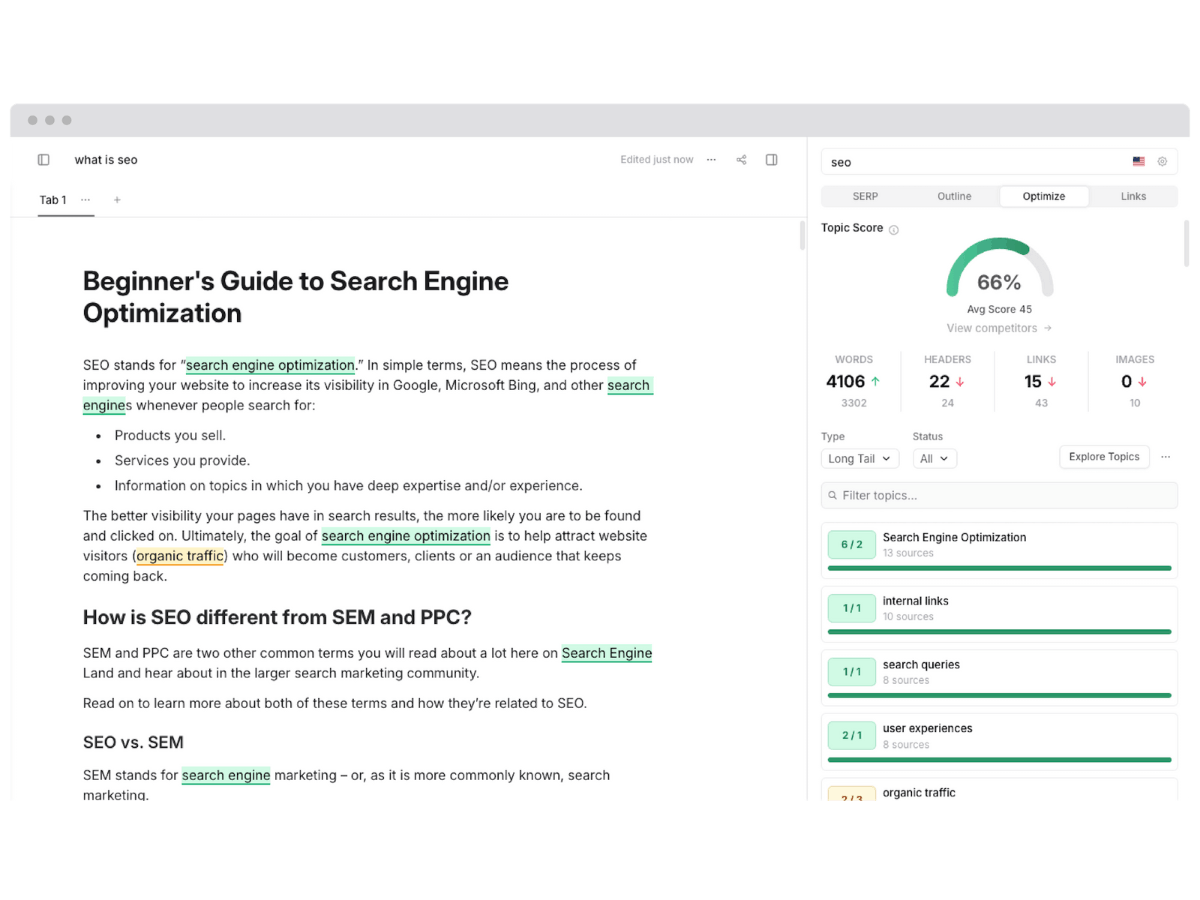
Frase is the tool teams use when they want clarity before committing words to the page. It shows how a topic is actually being handled across search results, helping writers understand what depth, angles, and coverage are expected before they start drafting. The result is content that feels intentional from the first outline, not patched together after publishing.
What Frase Does Best:
- Search Intent and SERP Research: Frase analyzes top ranking pages to surface key questions, subtopics, and themes, helping writers understand search intent before they start writing.
- Automated Content Briefs and Outlines: Frase generates structured outlines from search data, making it easier to plan content, align scope, and streamline the briefing process.
- Question and Topic Discovery: The platform pulls common questions from search and related sources, helping teams fill content gaps and improve topical depth without keyword stuffing.
One Notable Limitation: Frase is strongest at the research and planning stage, but it offers less real time guidance during the writing process compared to tools that focus heavily on in editor optimization. For teams that want detailed scoring and live feedback while drafting, Frase is often used alongside another tool rather than on its own.
2. Hypertxt

Hypertxt is built for teams that want fast, structured content creation without overcomplicating the process. It focuses on turning search data into clear drafts and outlines quickly, making it useful for workflows where speed, consistency, and direction matter more than deep manual analysis.
Rather than acting as a heavy research platform, Hypertext fits best when teams want to move from keyword to first draft with minimal friction. It is often used to accelerate early content production while keeping SEO considerations in view.
What Hypertext Does Best:
- Fast Draft Generation: Hypertext helps teams generate content drafts quickly based on target keywords, making it easier to move from idea to publishable structure without starting from a blank page.
- Structured Content Guidance: The tool provides clear section level direction, helping writers maintain logical flow and coverage without getting overwhelmed by excessive metrics.
- Workflow Simplicity: Hypertext is designed to be lightweight and easy to use, which makes it appealing for smaller teams or creators who want SEO support without a steep learning curve.
One Notable Limitation: Hypertext prioritizes speed and simplicity, which means it offers less depth in SERP analysis and optimization controls compared to more research heavy tools. Teams focused on detailed competitive breakdowns or advanced optimization often pair it with another platform.
3. NeuronWriter
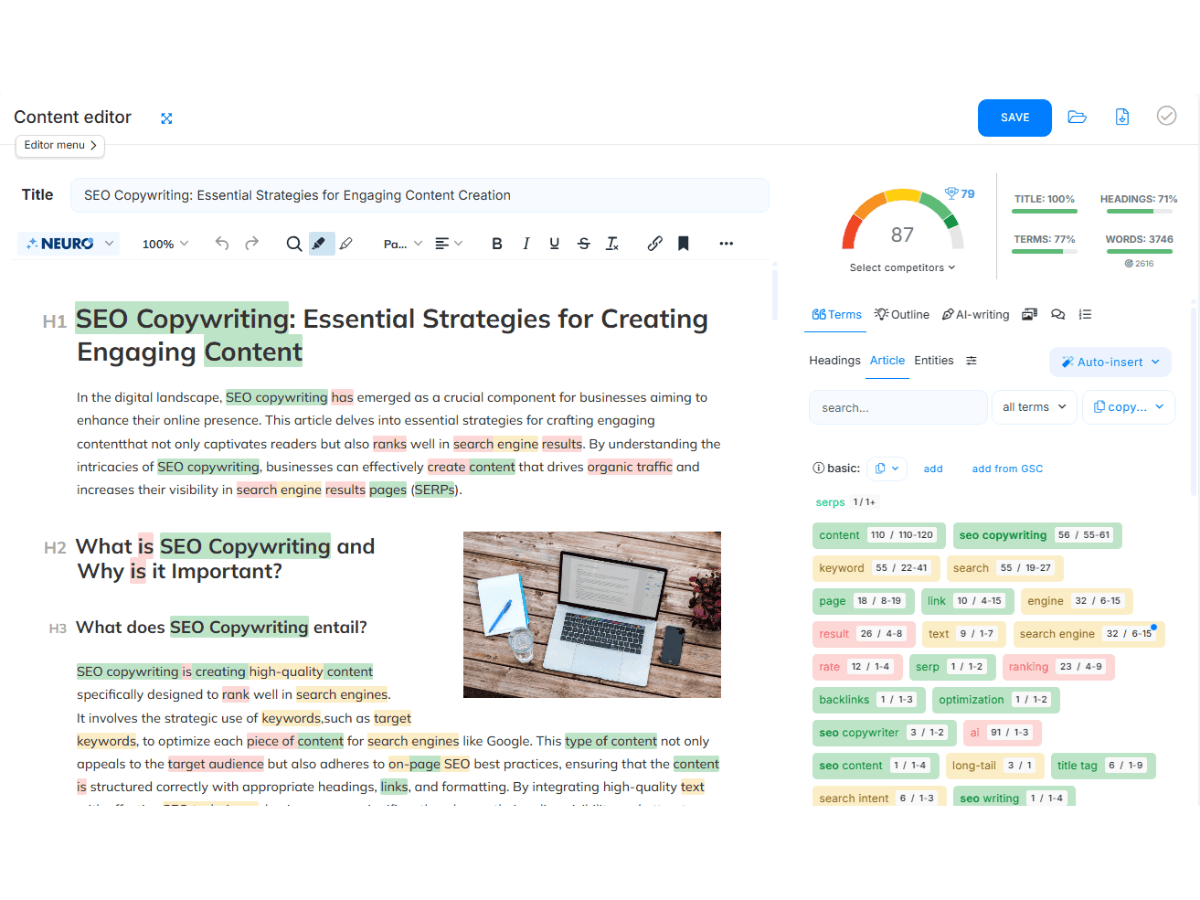
NeuronWriter is a content optimization tool designed for teams that want structured guidance while writing, without losing editorial control. It combines SERP based insights with real time recommendations, making it useful during both drafting and optimization stages.
The platform is often used by writers and SEOs who want a balance between data driven direction and hands on writing. It supports a more iterative workflow, where content is refined as it is written rather than optimized only at the end.
What NeuronWriter Does Best:
- Real Time Content Optimization: NeuronWriter provides live guidance while drafting, helping writers adjust structure, topical coverage, and relevance as the content takes shape.
- Semantic and Topical Analysis: The tool emphasizes related concepts and semantic terms, making it easier to build topical depth without forcing keywords into the copy.
- Content Scoring and Readability Signals: NeuronWriter offers clear scoring and readability indicators, helping teams assess optimization progress while keeping content user focused.
One Notable Limitation: NeuronWriter can feel more hands on than lighter tools, which may slow down teams that prioritize speed over iterative optimization. For high volume publishing workflows, it is often paired with simpler drafting tools to maintain momentum.
4. SE Ranking

SE Ranking is an all in one SEO platform that covers content optimization as part of a broader search toolkit. It is often chosen by teams that want to manage rankings, audits, keyword research, and content performance in one place rather than relying on multiple standalone tools.
Instead of focusing only on writing assistance, SE Ranking fits into workflows where content is closely tied to ongoing SEO tracking and site level performance. This makes it especially useful for teams that want visibility across the full lifecycle of a page, from creation to ranking to updates.
What SE Ranking Does Best
- All in One SEO Coverage: SE Ranking combines content optimization with rank tracking, site audits, and keyword monitoring, giving teams a centralized view of SEO performance.
- Content Editor With SEO Guidance: The platform includes a content editor that offers optimization suggestions based on SERP data, helping writers align pages with ranking signals while drafting.
- Performance Tracking and Reporting: SE Ranking makes it easy to monitor keyword positions and content performance over time, which helps teams decide when updates or revisions are needed.
One Notable Limitation: Because SE Ranking covers many SEO functions, its content optimization features are not as deep or specialized as tools built solely for writing workflows. Teams that want advanced in editor guidance often use it alongside a dedicated content optimization platform.
5. MarketMuse
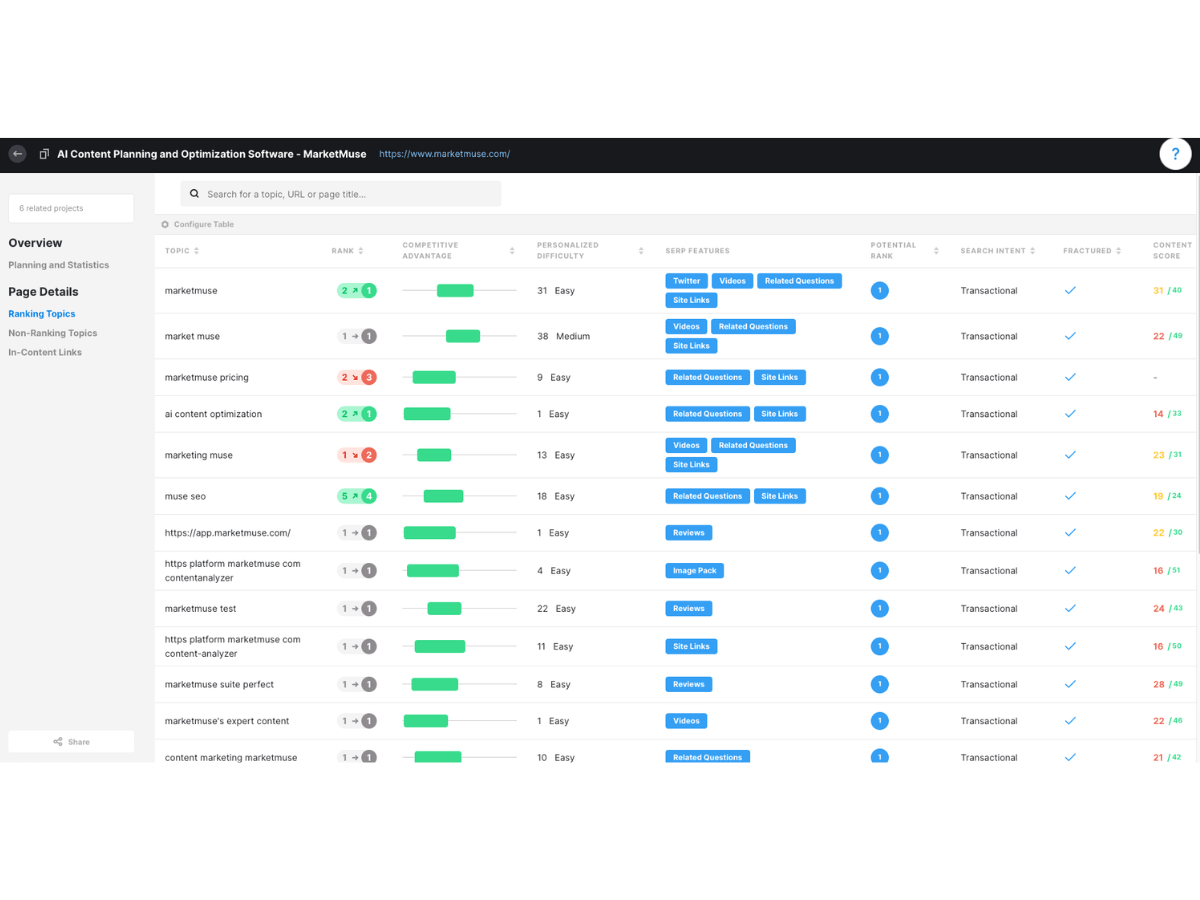
MarketMuse is a content intelligence platform built for teams focused on topical authority and long term content performance. It helps organizations understand how deeply a topic should be covered and where gaps exist across an entire content library, not just on a single page.
The tool is commonly used at a strategic level. Rather than guiding sentence by sentence writing, MarketMuse supports decisions around what to publish, what to update, and how to build authority over time. This makes it a strong fit for teams managing large sites or content driven brands.
What MarketMuse Does Best:
- Topical Authority and Content Depth Analysis: MarketMuse evaluates how comprehensively a topic is covered and identifies areas where additional depth or supporting content is needed.
- Content Planning and Prioritization: The platform helps teams decide which pages to create or update based on potential impact, difficulty, and competitive gaps.
- Site Wide Content Insights: MarketMuse looks across an entire content library to surface weaknesses, overlaps, and opportunities for improvement at scale.
One Notable Limitation: MarketMuse is more strategic than tactical, which can feel heavy for smaller teams or writers looking for quick drafting guidance. It also has a steeper learning curve and higher cost compared to lighter content optimization tools.
6. Clearscope
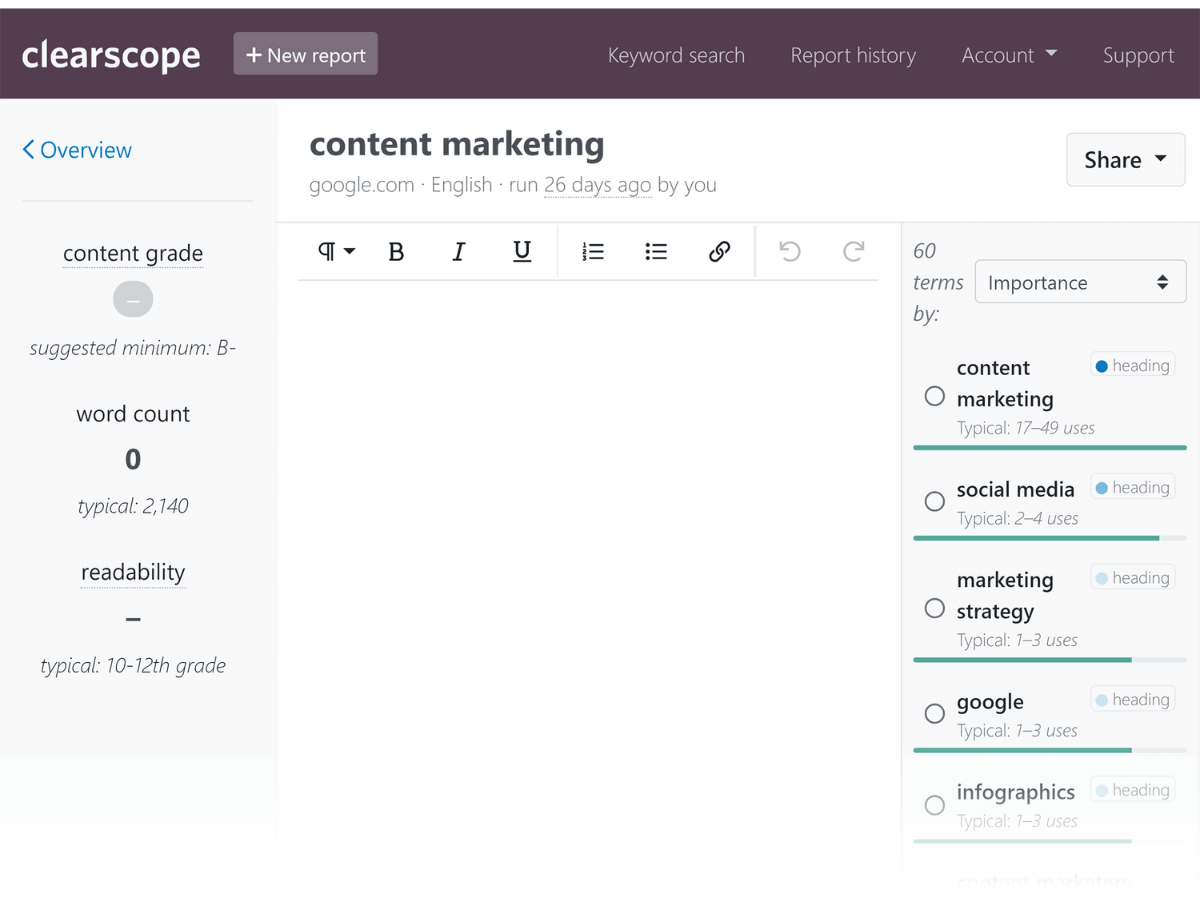
Clearscope is a content optimization tool known for its clean interface and focus on readability alongside SEO relevance. It helps teams understand which terms and concepts commonly appear in high performing content, making it easier to optimize without overcomplicating the writing process.
The platform fits well into workflows where writers want clear guidance but still want the freedom to write naturally. Clearscope is often used during drafting and final optimization, especially by teams that value editorial quality as much as search performance.
What Clearscope Does Best:
- Simple, Readable Optimization Guidance: Clearscope presents SEO recommendations in a way that is easy to understand, helping writers focus on clarity and flow rather than chasing metrics.
- Term and Concept Coverage: The tool highlights important terms related to a topic, making it easier to cover key concepts without keyword stuffing.
- Editor Friendly Workflow: Clearscope integrates smoothly into writing workflows, which makes it popular with editorial teams that want SEO support without disrupting how they write.
One Notable Limitation: Clearscope focuses primarily on page level optimization and does not offer broader content planning or site wide analysis. Teams managing large content strategies often pair it with more strategic SEO tools.
7. WriterZen

WriterZen is a content creation platform designed to support SEO workflows from topic discovery through drafting. It brings research, planning, and writing into a single space, which makes it appealing to teams that want structure without juggling multiple tools.
The platform is often used by writers and SEOs who want clearer direction early on while still having support during content creation. WriterZen fits best in workflows that value organization, repeatability, and a clear path from keyword to finished draft.
What WriterZen Does Best:
- Topic Discovery and Clustering: WriterZen helps identify related topics and group them into clusters, making it easier to plan content that supports broader SEO goals.
- Structured Content Planning: The platform provides tools to organize ideas, outlines, and drafts in one place, which helps teams stay aligned throughout the writing process.
- Integrated Writing Environment: WriterZen combines planning and drafting features, allowing writers to move from research to execution without switching platforms.
One Notable Limitation: WriterZen’s all in one approach can feel less specialized compared to tools that focus deeply on a single function like live optimization or advanced content intelligence. Teams with more complex needs often supplement it with additional SEO tools.
8. Scalenut

Scalenut is an AI driven SEO content platform designed to help teams move quickly from keyword research to publish ready drafts. It brings planning, writing, and optimization into a single workflow, which makes it appealing for teams focused on scale and consistency.
The platform is often used by content teams producing high volumes of SEO driven pages. Scalenut fits best in workflows where speed and repeatability matter, while still keeping content aligned with search intent and basic optimization standards.
What Scalenut Does Best:
- End to End Content Workflow: Scalenut supports the full content process, from keyword research and topic planning to drafting and optimization in one platform.
- AI Assisted Drafting: The tool helps generate structured drafts quickly, reducing the time it takes to go from idea to first version.
- Optimization Within the Editor: Scalenut provides in editor guidance to help content stay aligned with SEO signals while writing, without relying on external tools.
One Notable Limitation: Scalenut’s emphasis on speed and automation can feel restrictive for teams that want deeper manual control or advanced competitive analysis. It is often paired with more specialized tools when precision and strategy are a priority.
9. Content Harmony
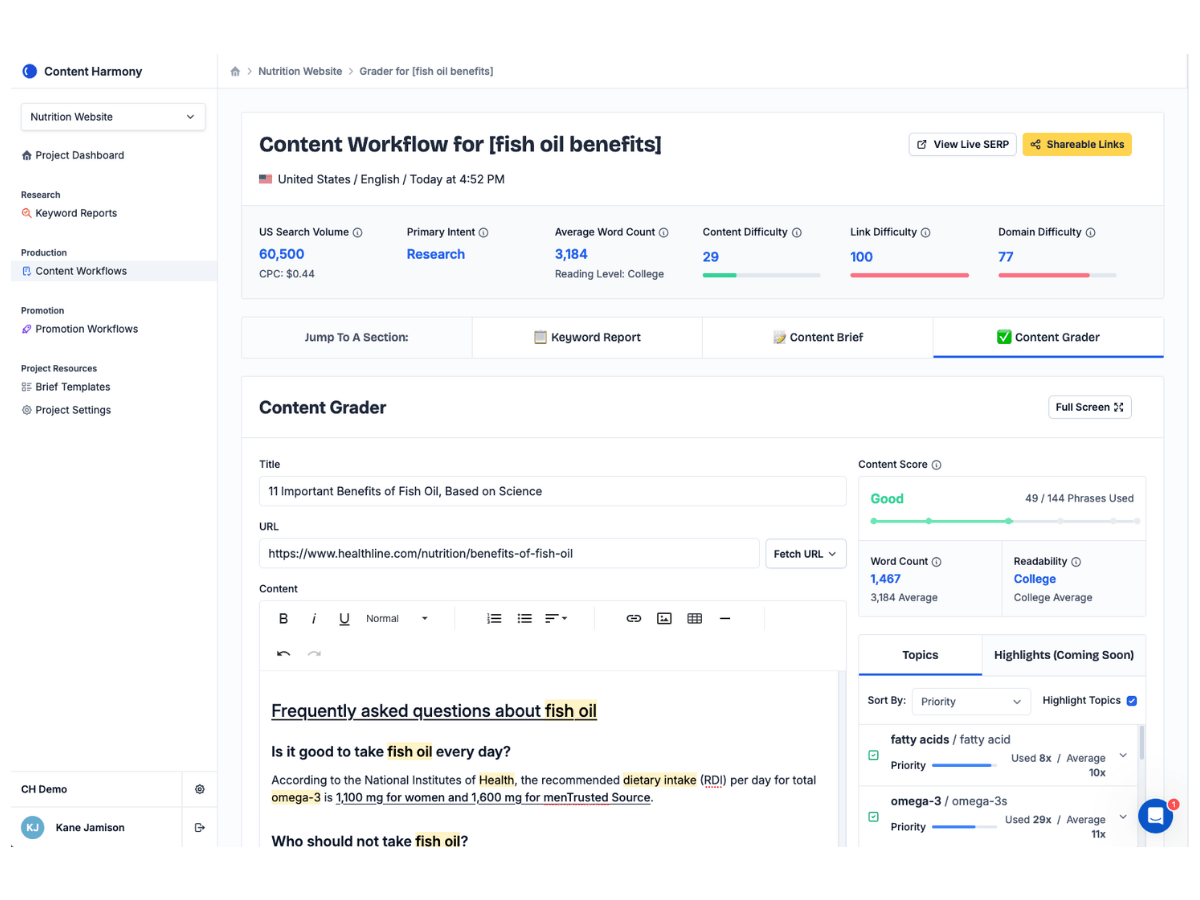
Content Harmony is a content workflow and optimization platform built for teams that want alignment between SEO strategy, editorial planning, and writing. It focuses on turning research into clear briefs and guidance that writers can actually follow, which helps reduce revisions and misalignment.
The platform fits best in collaborative environments where SEOs, editors, and writers work together. Content Harmony is often used to standardize how content is planned and produced, especially for teams managing multiple contributors or large content calendars.
What Content Harmony Does Best:
- SEO Focused Content Briefs: Content Harmony creates detailed briefs that connect search data with clear editorial direction, helping writers understand expectations before drafting.
- Workflow Alignment Across Teams: The tool is designed to support collaboration between SEO, content, and editorial teams, keeping everyone aligned on goals and scope.
- Topic and Competitive Research: Content Harmony surfaces insights from search results and competitors to inform content direction without overwhelming writers with raw data.
One Notable Limitation: Content Harmony is strongest at planning and briefing rather than live, in editor optimization. Teams that want real time scoring or drafting feedback often pair it with a dedicated content optimization tool.
10. Jasper
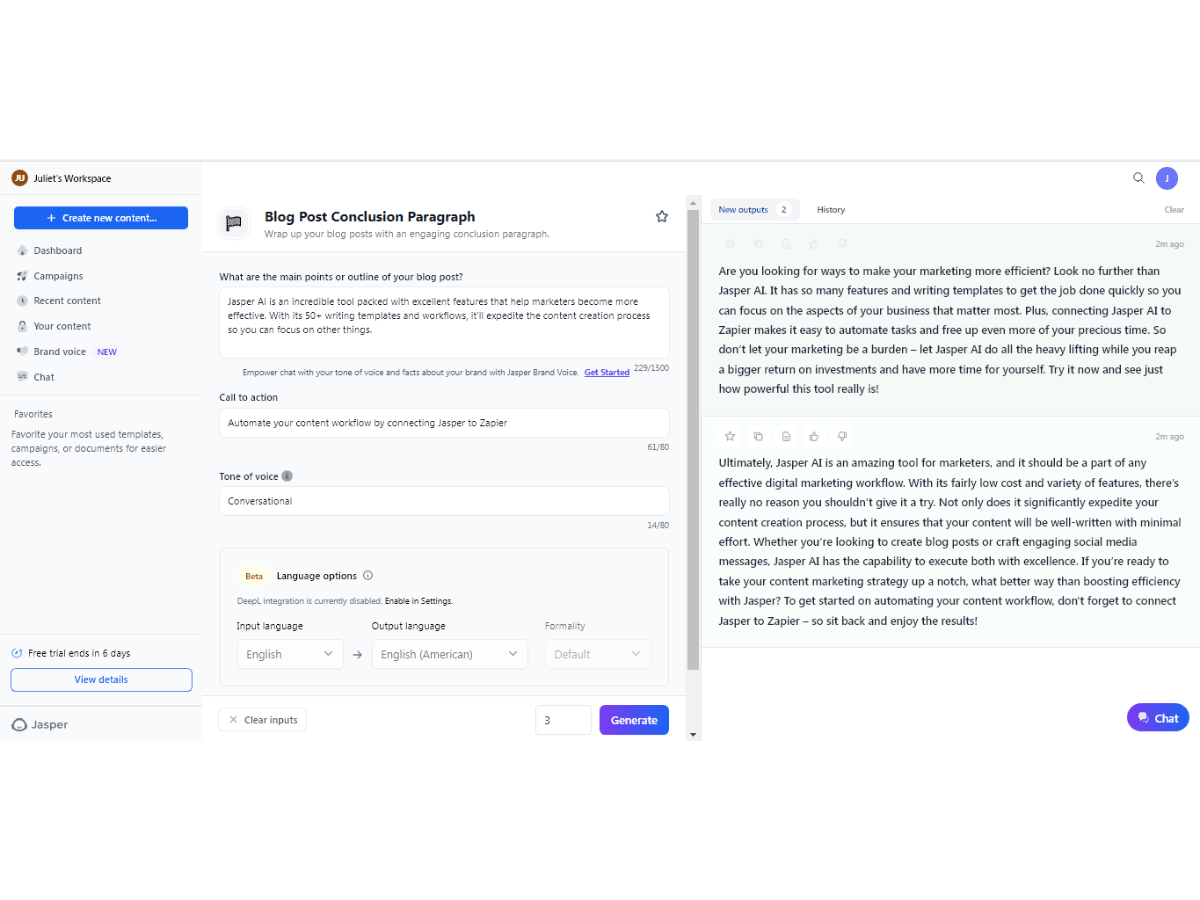
Jasper is an AI writing platform built to help teams produce content faster while maintaining brand voice and consistency. It is commonly used for drafting blog posts, marketing copy, and long form content, making it a popular choice for teams that prioritize speed and scale.
Rather than positioning itself as a pure SEO tool, Jasper fits best in workflows where AI assisted writing supports content production at volume. SEO guidance is often handled alongside Jasper rather than within it, especially for teams with established optimization processes.
What Jasper Does Best
- AI Assisted Content Creation: Jasper helps generate drafts quickly, making it easier for teams to move from idea to written content without starting from scratch.
- Brand Voice and Style Controls: The platform allows teams to define tone and voice guidelines, helping maintain consistency across different writers and content types.
- Flexible Use Across Content Formats: Jasper supports a wide range of content needs, from blog posts to marketing and sales copy, which makes it versatile for growing teams.
One Notable Limitation: Jasper does not offer deep built in SEO analysis or live optimization guidance. Teams focused heavily on search performance often pair it with a dedicated SEO or content optimization tool.
Surfer SEO Alternatives Comparison Overview
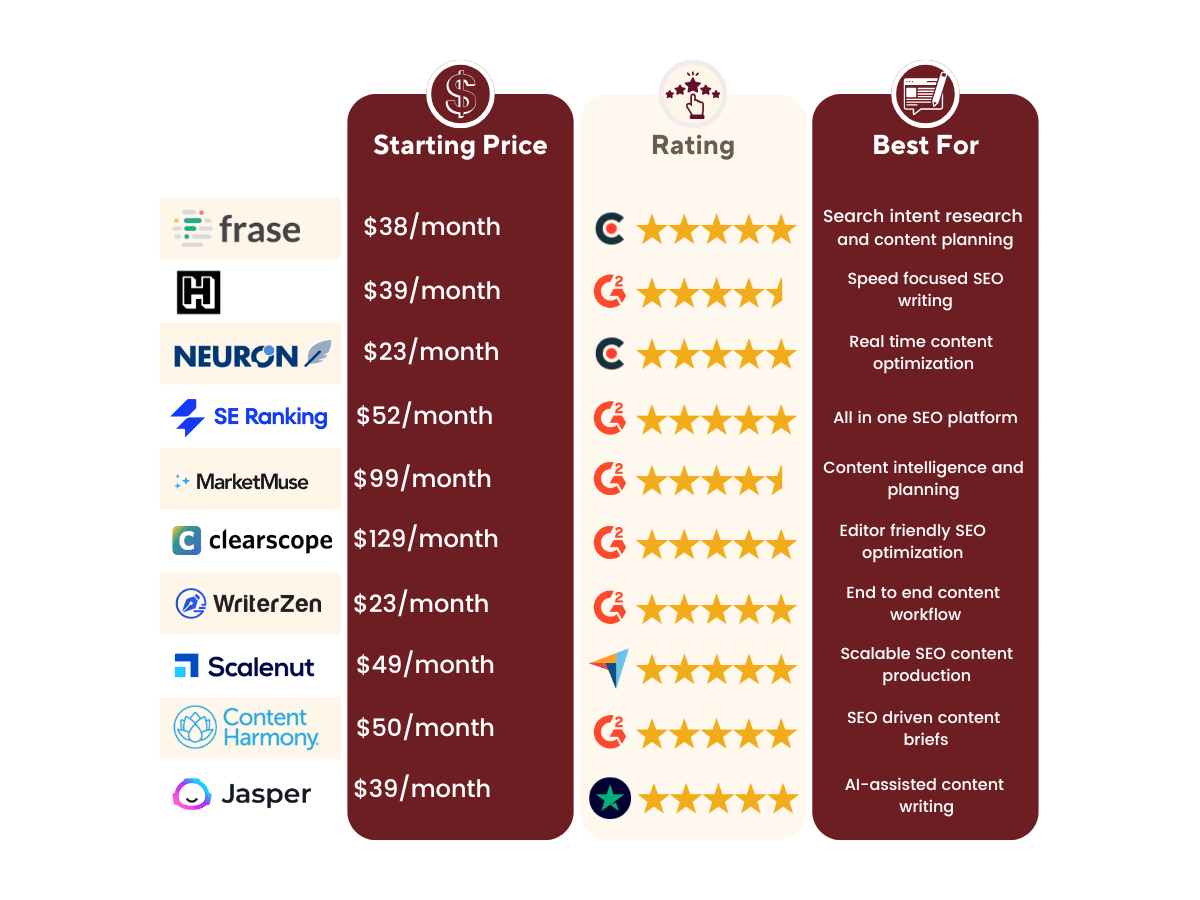
How We Evaluated These Alternatives
With nearly 90% of marketers still using blog posts to reach their goals, this list was built around how SEO and content tools are actually used, not how they’re marketed. The focus is on usefulness, clarity, and fit within modern content workflows.
- SEO research capabilities, including keyword research, keyword suggestions, search volume, keyword difficulty, and keyword analysis using data from search engines and tools like Google Keyword Planner
- Content planning and optimization, such as keyword clustering, detailed content briefs, word count guidance, and support for optimizing existing content and creating high quality content
- Competitor analysis, including SERP analyzer features, competitor content structure insights, and visibility into top ranking content
- Workflow fit, including ease of use, Google Docs compatibility, project management tools, and how well the tool fits into the content creation process
- Feature depth, from on page SEO and backlink analysis to AI writing tools, natural language processing, and AI search optimization
- Scalability and flexibility, whether the platform works as a lightweight SEO content tool, an all in one solution, or a full featured SEO platform
Instead of ranking tools from best to worst, this approach highlights differences so you can quickly see which options match how you work, similar to how comparisons of AI SEO and GEO content tools focus on real workflow fit rather than surface level features.
Putting These Tools in Perspective
Surfer SEO continues to be a solid option for content optimization, but it is not the only way teams approach SEO today. The tools covered in this guide reflect how workflows have expanded, with different platforms supporting research, planning, writing, optimization, and performance tracking in different ways.
Some tools are designed to help teams research keywords and analyze search intent. Others focus on content briefs, AI assisted drafting, or refining existing content based on ranking factors and competitor analysis. None of them replace the need for good judgment or high quality content, but each can make specific parts of the content creation process more efficient.
The right choice is the one that aligns naturally with how you create content, supports consistent optimization, and helps your pages perform better across search engines over time, especially as content marketing trends continue to shape how audiences discover and engage with content.
Related ...

.jpg)



Subscribe to our insights


