


Search the site

Best Generative Engine Optimization (GEO) Agencies in 2026
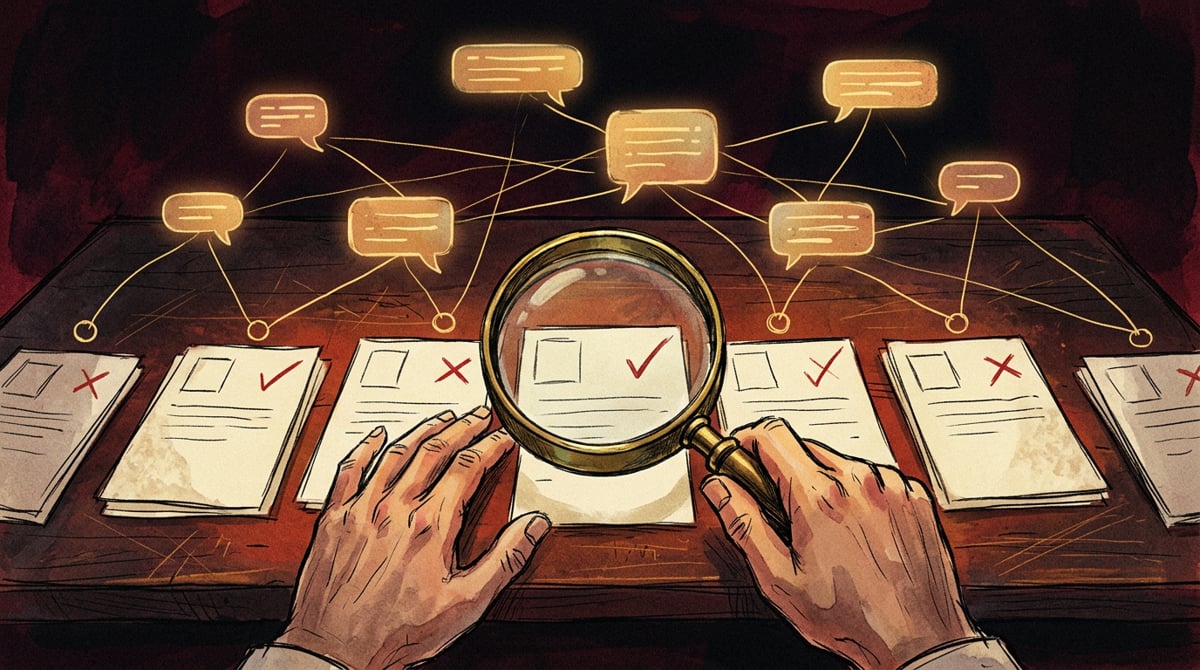
Somebody on your leadership team asked ChatGPT for the best vendors in your category. You weren't in the answer. Your competitor was.
Now you've been told "we need to show up in AI," and you're building a shortlist of GEO agencies.
Here's the problem. Sometime in 2025, half the SEO agencies in America added "GEO" to their homepage. Same team. Same deliverables. New H1. Some of them are genuinely good at this. Some are selling you a dashboard and a prayer.
I've spent 20+ years building companies and doing marketing. We do this work at Aiken House, so I have strong opinions about what real GEO looks like. This guide is the buyer-side version. How I'd evaluate an agency. The questions I'd ask on the sales call. The red flags. What it should cost. And the agencies I'd actually put on a shortlist, depending on what kind of company you run.
Back in early 2024, Gartner forecast that traditional search engine volume would drop 25% by 2026 as people shift to AI chatbots and virtual agents. Whether the exact number lands or not, the direction is obvious to anyone watching their own analytics.
What a GEO Agency Actually Does (and How It Differs from SEO)
SEO earns a ranking. GEO earns a mention.
When someone asks ChatGPT, Perplexity, Gemini, Claude or Google's AI Overviews a question, the engine pulls from a pile of sources, writes one answer, and cites a handful of them. Maybe three. Maybe eight. A GEO agency's job is to make your brand one of those sources and to make sure the answer describes you correctly.
In practice, real GEO work covers five things:
- Prompt research. Figuring out what your buyers actually ask. Not "CRM software." More like "which CRM works best for a 40-person construction company that already uses QuickBooks?" These prompts are long, specific and conversational.
- Content built to be extracted. Clear definitions, direct answers in the first two sentences, comparison pages, original data. A Princeton-led GEO study found that adding statistics, quotations and citations to content lifted visibility in generative answers by up to 40%.
- Off-site presence. AI engines summarize consensus. If review sites, Reddit threads, YouTube videos and industry lists all say the same thing about you, the answer will too.
- Technical access. AI crawlers that can reach your pages, structured data, and consistent facts about your company everywhere it appears.
- Measurement. Tracking which prompts mention you, which pages get cited, and whether AI referral traffic turns into pipeline.
Good GEO sits on top of good SEO. It doesn't replace it. If your site is a technical mess and your content says nothing original, no agency is going to talk its way into a ChatGPT answer for you. I made the longer case for why this shift is permanent in GEO Is Not a Trend. It's the New Default for Anyone Who Wants to Be Found Online.
Pew Research tracked real browsing data and found that Google users clicked a traditional result in 8% of visits when an AI summary appeared, versus 15% when it didn't. Clicks on the links inside the summary itself happened in just 1% of visits. The answer is the destination now.
Ask every agency to explain, in one sentence, how their work changes what an AI engine retrieves and cites. If the answer is about keywords and backlinks with "AI" sprinkled on top, you're looking at SEO with a new invoice.
How We Evaluated These Agencies
I didn't give anyone a fake 8.7 out of 10. Agency fit depends on your business, so every agency below gets a "Best for" label instead of a rank. They're grouped by who they serve best, not ordered by who's "better."
Here's what I looked at:
- Citation proof. Can they point to specific AI answers that cite client pages they built? Not a score. An actual answer.
- Content production. Do they have writers and editors who can produce original, expert content? GEO without a content team is just reporting.
- Measurement. Do they track citations across multiple engines, share the raw prompt data, and connect it to traffic or pipeline?
- Pricing transparency. Will they tell you what you're paying for and how the engagement is structured before the third call?
- No guaranteed placements. Anyone who promises a spot in ChatGPT is either lying or planning to game it. Both end badly.
I based this on each agency's public work, published research, case studies and how they describe their own process. Verify everything on a call. This category is moving fast.
Full disclosure: Aiken House does GEO work too. We left ourselves off this list on purpose. You came here for a candid shortlist, not a sales page.
Our own data shows how different AI-era search behavior looks. Our AirOps alternatives guide earned 37,241 Google impressions in 90 days at an average position of 6.3, almost all on long, prompt-shaped queries like "which has better AEO capabilities: AirOps or MarketMuse?" People are typing ChatGPT-style questions into Google now. That's the behavior GEO is built for.
The Best GEO Agencies in 2026
Ten agencies I'd consider, each with what they do well, what to watch for, and how they price when that's public.
iPullRank
Best for: Enterprise brands with complex sites- What they do well
- Founder Mike King coined "Relevance Engineering," a framework that blends information retrieval, content strategy, UX and digital PR. The team published The AI Search Manual and built tools like Qforia for mapping the hidden queries AI engines fan out to. This is the most technically rigorous shop on the list.
- Watch-outs
- Priced and staffed for enterprise. If you're a 30-person startup, this isn't your agency yet.
- Pricing model
- Their flagship AI Search Strategy Program is a six-month engagement, with a top tier publicly listed at $150K.
Graphite
Best for: Venture-backed tech and consumer startups- What they do well
- Research-driven growth agency led by CEO Ethan Smith, with an in-house AI research team studying what actually gets cited. Strong on the long tail: help center content, Reddit and YouTube presence, and question-shaped pages. Webflow is a public case study.
- Watch-outs
- Their playbook often leans on your product and help center content, so you'll need product team time, not just marketing budget.
- Pricing model
- Custom retainer. Not published.
Directive
Best for: B2B SaaS that needs GEO tied to pipeline- What they do well
- Works exclusively with B2B and SaaS companies and reports everything back to pipeline and revenue through its Customer Generation approach. Has a dedicated GEO practice alongside technical SEO and content.
- Watch-outs
- Directive is a full-service performance shop. Make sure GEO is a real workstream with named owners, not a line item inside a paid media pitch.
- Pricing model
- Custom retainer, typically bundled with SEO or paid programs.
Go Fish Digital
Best for: Ecommerce and retail brands- What they do well
- Twenty years in search, with a heavy ecommerce practice and its own GEO tooling, including Barracuda, an AI Overview Analyzer and a Semantic Content Audit. Combines GEO with digital PR and paid, which matters when product recommendations in AI answers are on the line.
- Watch-outs
- Big service menu. Ask who owns GEO for your account day to day and how much of their time you get.
- Pricing model
- Custom proposal.
NoGood
Best for: Consumer and DTC scaleups- What they do well
- New York growth agency that runs cross-functional "growth squads" and was early to market with answer engine optimization. Uses Goodie, an AEO platform closely tied to the agency, for monitoring across ChatGPT, Gemini, Claude and Perplexity. Has public consumer case studies, including SteelSeries.
- Watch-outs
- When the agency and the measurement tool are this close, ask for the raw prompt data and a second source of truth so you can verify the results yourself.
- Pricing model
- Custom retainer.
First Page Sage
Best for: B2B firms that sell expertise- What they do well
- One of the first agencies to name and sell GEO, with a published framework dating back to 2023. Built around thought leadership content written for technical and executive buyers. A good fit for professional services and complex B2B, where the expert voice is the product.
- Watch-outs
- Premium pricing and longer commitments. Ask about the minimum term on the first call.
- Pricing model
- Retainer, quoted by scope.
Siege Media
Best for: Brands that win on content and digital PR- What they do well
- Long-time content marketing agency with serious design and digital PR muscle. That combination matters for GEO, because earned mentions on other sites shape what AI engines say about you as much as your own pages do.
- Watch-outs
- Built for bigger content programs. If you only need an audit and a few fixes, you're the wrong size client.
- Pricing model
- Custom retainer.
Omniscient Digital
Best for: Product-led B2B SaaS- What they do well
- Builds organic growth engines for product-led SaaS, mixing SEO, GEO, programmatic pages and content built from a company's own data and product assets. Strong at turning product knowledge into pages AI engines can quote.
- Watch-outs
- SaaS lens. If you're local, ecommerce or services, look elsewhere.
- Pricing model
- Custom retainer.
Minuttia
Best for: Mid-market B2B SaaS wanting one plan for Google and AI- What they do well
- B2B SaaS content and search agency that treats AI search as an extension of SEO rather than a separate product. Credit where it's due: they wrote one of the only genuinely editorial GEO agency guides out there, which tells you they think about this from the buyer's side.
- Watch-outs
- Niche focus on SaaS. Great if that's you. Limiting if it isn't.
- Pricing model
- Custom retainer.
Animalz
Best for: B2B brands where writing quality is the moat- What they do well
- One of the best-known B2B SaaS content agencies, now with answer engine optimization built into its core SEO and content program instead of sold as a bolt-on. If you need authoritative long-form content that AI engines treat as a reference, they're strong.
- Watch-outs
- Content-first. If your site has technical problems blocking AI crawlers, pair them with a technical partner.
- Pricing model
- Custom retainer.
Comparison Table
| Agency | Best for | Core GEO service | Measurement | Pricing model |
|---|---|---|---|---|
| iPullRank | Enterprise, complex sites | Technical GEO, relevance engineering | Custom AI search measurement plans | 6-month program, top tier listed at $150K |
| Graphite | Venture-backed startups | Long-tail AEO, Reddit, YouTube, help center | In-house citation research | Custom retainer |
| Directive | B2B SaaS | GEO plus SEO tied to pipeline | Pipeline and revenue reporting | Custom retainer |
| Go Fish Digital | Ecommerce and retail | GEO, SEO, digital PR, paid | Proprietary tools (Barracuda, AIO Analyzer) | Custom proposal |
| NoGood | Consumer and DTC scaleups | Full-funnel AEO with growth squads | Goodie AEO platform | Custom retainer |
| First Page Sage | Expertise-led B2B | Thought leadership GEO | Rankings, citations, leads | Retainer by scope |
| Siege Media | Content and PR-driven brands | Content, design, digital PR | Traffic, links, AI visibility | Custom retainer |
| Omniscient Digital | Product-led SaaS | GEO, programmatic SEO, content | Organic and pipeline metrics | Custom retainer |
| Minuttia | Mid-market B2B SaaS | Combined SEO and AI search | Search and AI visibility reporting | Custom retainer |
| Animalz | Writing-led B2B brands | Authority content with AEO built in | Content performance plus AI visibility | Custom retainer |
GEO vs AEO vs AI SEO: Do the Labels Matter?
Mostly, no.
Answer engine optimization (AEO) grew out of the featured snippet and voice search era. Generative engine optimization (GEO) came from academic research in 2023. "AI SEO" and "LLM SEO" are marketing labels that sound good on a services page. In 2026, the people doing the best work use them interchangeably.
What matters is the outcome. Are you being cited? Is the answer accurate? Is it sending buyers who convert? An agency that obsesses over which acronym is "correct" is usually avoiding that conversation.
Most "GEO agencies" are SEO agencies that changed their H1 in 2025. That's not automatically bad. Plenty of great SEO teams are adapting fast. But ask any of them to show you a specific answer in ChatGPT or Perplexity that cites a client page they wrote. A dashboard of "AI visibility scores" is not proof. A citation is.
G2 surveyed 1,076 B2B software buyers in March 2026 and found that 51% now start their research with an AI chatbot more often than with Google, up from 29% a year earlier. AI chatbots are now the top source shaping buyer shortlists, ahead of review sites and vendor websites.
7 Questions to Ask Before You Sign
Bring these to every sales call. The good agencies will love them. The fakers will get vague.
- "Show me a specific AI answer that cites a client page you wrote." Live, on screen, in ChatGPT or Perplexity. Not a screenshot from six months ago.
- "Which prompts will you track, and who picks them?" If they only track prompts that include your brand name, you'll look great on paper and invisible in real life. Buyers don't search for you by name. They search for the problem.
- "What tool do you measure with, and can I see the raw data?" You want the prompt list, the engines, the dates and the actual responses. Not just a trend line.
- "Who writes the content, and how do you get expertise out of my team?" Original insight is what gets cited. Ask what a subject-matter interview looks like.
- "What off-site work is included?" Reviews, PR, Reddit, YouTube and industry lists all shape AI answers. If the plan is 100% on your own blog, it's half a plan.
- "What should I expect at month three versus month nine?" Honest agencies will tell you early wins are usually on long-tail prompts and that competitive head terms take longer.
- "What do I own if we part ways?" Content, tracking setup, prompt lists and dashboards should leave with you.
Red Flags
Walk away if you see any of these.
- Guaranteed ChatGPT placement. Nobody controls what a model says. Not the agency. Not even the model makers, fully. A guarantee means they're planning to game it, or they're planning to redefine "placement" later.
- Prompt-stuffing and fake consensus. Mass-producing thin pages, seeding Reddit with sock puppets, or planting your brand in dozens of low-quality "best of" lists. It can work for a quarter. Then it stops working and leaves a mess. I wrote about why in You Can Still Game AI Visibility. You Just Cannot Keep the Winnings.
- No content team. If the deliverable is audits and dashboards with no one writing, you're paying for a report card.
- A proprietary "AI score" with no citations behind it. Scores are easy to make go up. Citations are hard.
- A 12-month lock-in before a pilot. A confident agency will let you start with an audit or a 90-day sprint.
What GEO Should Cost
Most GEO agencies don't publish prices, so here's what I see in real proposals. Treat these as rough ranges for a US mid-market company. Enterprise scope runs higher.
| Engagement | What you get | Typical range | Timeline |
|---|---|---|---|
| Audit | Baseline of how AI engines describe you, citation gaps, technical blockers, prioritized fixes | $3,000 to $25,000 one-time | 2 to 6 weeks |
| Project or sprint | Audit plus a defined batch of new or rewritten pages, schema and off-site work | $15,000 to $75,000 | 2 to 4 months |
| Ongoing retainer | Prompt tracking, monthly content, PR and off-site work, reporting | $5,000 to $25,000 per month | 6 months minimum to judge |
| Enterprise program | Multi-brand or multi-market strategy, measurement plans, team training | $25,000+ per month or six-figure programs | 6 to 12 months |
Two more things to budget for. First, monitoring software is usually a separate line item, anywhere from under $100 a month for basic tracking to enterprise contracts. We compared the options in Profound Alternatives: The Aiken House AI Visibility Stack for 2026. Second, if you plan to scale content production with AI tooling, check our roundup of AirOps alternatives for AI SEO and GEO content before an agency marks up the same tools. And if your real worry is what AI says about your brand's reputation, not just whether you show up, our breakdown of what reputation management costs covers that budget line too.
Start with an audit or a 90-day sprint. Pick 30 to 50 prompts your real buyers ask. Record what every major engine says today. Then judge the agency on one question at day 90: are we being cited in more of those answers, and are the answers more accurate? If yes, move to a retainer. If no, you lost a quarter instead of a year.
FAQ
What is a generative engine optimization agency?
A generative engine optimization (GEO) agency helps brands get mentioned and cited in AI-generated answers from tools like ChatGPT, Perplexity, Gemini, Claude and Google AI Overviews. The work combines prompt research, content built to be quoted, off-site reputation building, technical fixes so AI crawlers can read your site, and tracking of which AI answers cite you.
How is GEO different from SEO?
SEO aims to rank a page in a list of search results so people click it. GEO aims to get your brand included and described accurately inside a single AI-written answer, often with no click at all. GEO builds on SEO fundamentals but puts more weight on original data, direct answers, consistent facts about your brand, and what other trusted sites say about you.
How much does a GEO agency cost?
Most GEO agencies price by custom quote. For a US mid-market company, a one-time audit typically runs $3,000 to $25,000, a defined project runs $15,000 to $75,000, and an ongoing retainer runs about $5,000 to $25,000 per month. Enterprise programs cost more, and AI visibility tracking software is usually billed separately.
How long does it take to show up in ChatGPT or Perplexity answers?
Engines that search the web live, like Perplexity and ChatGPT with search, can start citing a new or improved page within weeks of it being indexed. Showing up for competitive, high-volume questions usually takes three to nine months, because those answers lean on broad consensus across many trusted sources. Answers drawn from a model's built-in training data change slowest, often only when a new model version is released.
Can an agency guarantee AI citations?
No. No agency controls what an AI model says, and answers change based on the user, the wording of the prompt and model updates. An agency can improve the odds and measure progress across a defined set of prompts. Any agency that guarantees placement in ChatGPT or another AI engine is a red flag.
Do I need a GEO agency if I already rank well on Google?
Not always. Strong Google rankings help, because many AI engines pull from search results. But ranking and being cited are not the same thing, and AI answers often cite third-party sources like reviews, Reddit and industry lists over your own pages. If buyers in your category research with AI tools and you're missing from those answers, it's worth an audit before committing to a full agency retainer.
One Last Thing
The right GEO agency won't sell you a score. It will show you real answers, real citations and real buyers. Start small, measure against prompts your customers actually ask, and give whoever you hire enough time to do work that lasts.
If you want a second opinion on an agency proposal, or you just want to know what ChatGPT says about you right now, happy to take a look. That conversation is always free at Aiken House.
Related ...

.jpg)



Subscribe to our insights


