


Search the site

Online Reputation Management Techniques Every Brand Can't Ignore in 2026
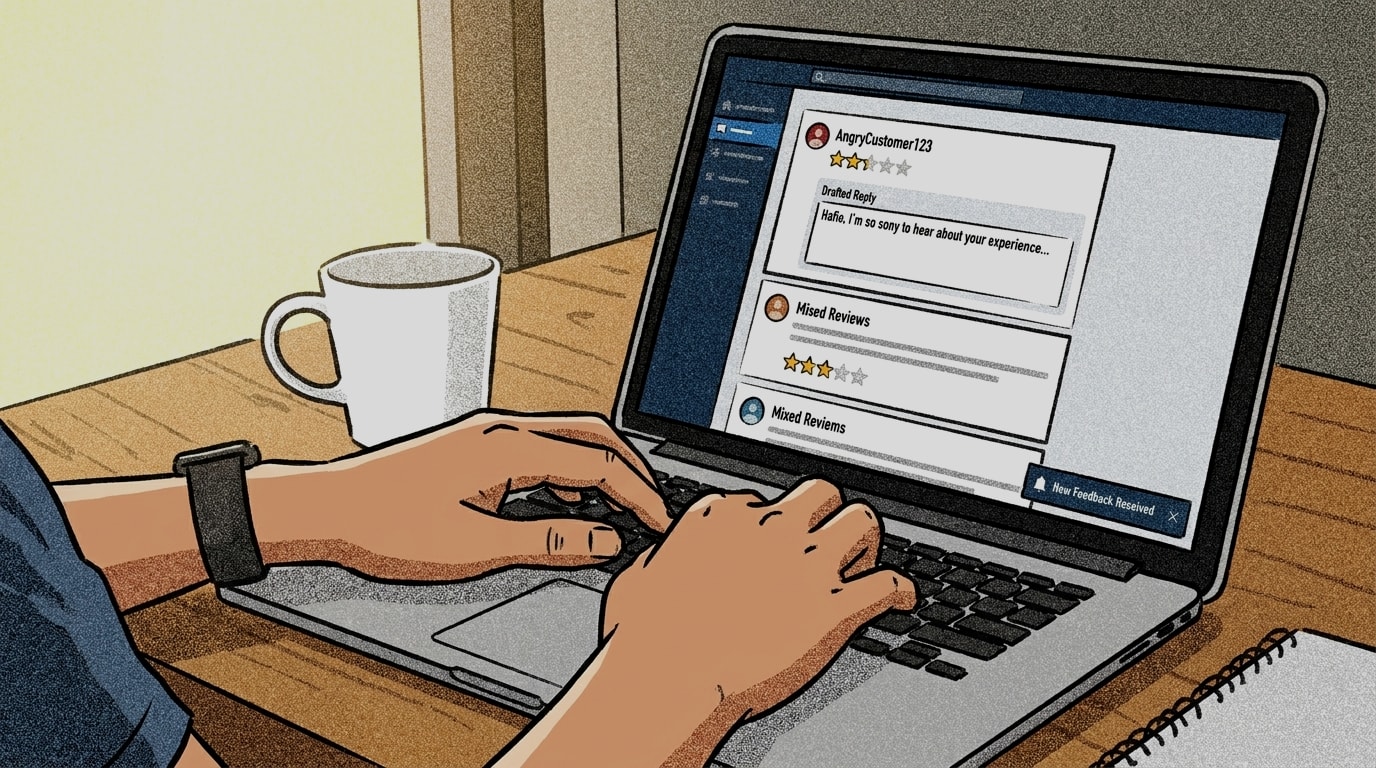
Before a prospect signs a contract, a candidate accepts an offer, or a journalist covers your story, they Google you. What shows up in those first few results does more selling, or unselling, than any pitch deck ever will.
And yet most brands have no real strategy for what lives there.
Online reputation management is not crisis PR. It is not just responding to bad reviews. In 2026, it covers everything from what ranks on page one of your branded search, to how AI tools like ChatGPT and Perplexity describe your company to users who never even visit your website.
The brands taking this seriously are building trust at scale. The ones ignoring it are losing deals they never knew were on the table.
Below, we break down the techniques that actually move the needle.
What Is Online Reputation Management and Why Brands Get It Wrong
Most brands confuse online reputation management with crisis response. Something goes wrong, a bad review lands, a story breaks, and suddenly everyone scrambles. That is not ORM. That is cleanup.
Real ORM is the ongoing work of shaping how your brand is perceived across every digital touchpoint. It is proactive, strategic, and when done right, one of the highest-leverage investments a brand can make.
ORM, PR, and crisis management are three different functions. PR builds narrative. Crisis management responds to threats. ORM runs in the background constantly, protecting and optimizing how your brand shows up before any threat even surfaces.
According to research, 94% of people say a negative review has convinced them to avoid a business entirely. Your reputation is not a soft metric. It is a revenue driver.
ORM in the Age of AI: How LLMs and GEO Are Reshaping Brand Perception
Search has changed. A growing number of people no longer scroll through blue links to form an opinion about your brand. They ask ChatGPT, Perplexity, or Google's AI Overview, and they take the summary they get at face value.
This is one of the most significant shifts in online reputation management that most brands are still not accounting for.
Here is how LLMs and GEO are actively reshaping brand perception:
- LLMs bypass your website entirely: Users get a summarized answer without clicking through, meaning your online content may never appear in search engine results pages.
- AI tools prioritize cited, authoritative sources: If your brand is not being mentioned online through trusted channels, negative comments and outdated information fill that gap, hurting your search rankings and brand image.
- Negative content gets amplified in summaries: A single poorly handled controversy can damage your perceived online reputation for months and surface as negative search results before you even respond.
- GEO is now a reputation lever: Brands using online reputation management ORM to promote positive content across social media sites and owned channels are already influencing how AI tools describe them to their target audience, turning a strong online presence into real business success.
AI-powered search is not replacing traditional ORM. It is adding a new layer that requires the same proactive mindset, applied to a new set of channels. Understanding how AI consulting firms are operationalizing this shift gives brands a clearer picture of where reputation management is heading.
Core Online Reputation Management Techniques Every Brand Needs
Managing your online reputation is not a single action. It is a set of ongoing practices that work together to shape how your brand is perceived. Here are the techniques that matter most:
1. Audit Your Online Reputation First
You cannot fix what you cannot see.
Search your brand the way a stranger would. Google your company name, key executives, and products. Look at what ranks on page one, what the sentiment is, and what you do not control. Then go deeper into the platforms where your customers are actually leaving feedback.
- Check Google Business, Trustpilot, G2, Glassdoor, and any industry-specific forums relevant to your space
- Look for unanswered reviews, outdated content ranking on page one, and recurring complaints
- Search your brand name and related hashtags across LinkedIn, X, Instagram, and Reddit to catch what review platforms miss
2. Manage and Respond to Reviews
Reviews are your most public sales conversation.
A one-star increase on a review platform can lift revenue by up to 9%. That makes your review strategy a direct revenue lever, not just a customer service task.
- Respond to every review, positive and negative, and keep responses timely and on brand
- Flag and report fake or malicious reviews through the platform
- Use recurring feedback themes to identify and fix real product or service gaps
3. Control Your Search Results
If you are not shaping page one, something else is.
What ranks on page one of your branded search is your first impression to every prospect, partner, and journalist who looks you up.
- Publish consistent, high-quality content across your owned channels to dominate branded search
- Optimize your Google Business Profile and keep it accurate and updated
- Pursue press coverage and third-party mentions that push positive content up the rankings
4. Monitor Brand Mentions in Real Time
Reputation threats rarely announce themselves.
The brands that respond fastest to emerging issues are the ones with monitoring systems already in place, not the ones scrambling to set one up after the damage is done.
- Set up Google Alerts as a baseline for brand name, executive names, and product names
- Invest in platforms like Mention, Brand24, or Brandwatch for deeper and faster coverage
- Track common misspellings of your brand name, they get mentioned more than you think
5. Build Thought Leadership and Owned Content
The brands with the strongest reputations are not just reacting, they are leading the conversation.
Consistently publishing authoritative content is one of the most sustainable ORM strategies available to any brand, and one of the most underused.
- Publish expert-led content that addresses the biggest questions in your industry
- Contribute to credible third-party publications to build authority beyond your own channels
- Keep your LinkedIn presence active, your executives visible, and your brand point of view clear
6. Have a Crisis Response Playbook Ready
The brands that recover fastest are the ones that prepared before anything went wrong.
No brand is immune to reputational threats. The difference between a quick recovery and lasting damage almost always comes down to how prepared you were going in. A crisis without a playbook is not just a PR problem. It is a leadership problem.
- Define what constitutes a reputational crisis for your brand and assign clear roles before one happens
- Draft holding statements and response templates in advance so your team is never starting from scratch when negative feedback goes public
- Establish an escalation process so the right people are looped in immediately, not after the story has already spread
7. Manage Your Knowledge Panel and Wikipedia Presence
What Google displays about your brand before anyone clicks anything is your most visible real estate.
Your Google Knowledge Panel and Wikipedia page are often the first things a prospect sees. If they are inaccurate, outdated, or missing entirely, that gap gets filled with whatever Google can find.
- Claim and verify your Google Knowledge Panel through Google Search Console
- Keep your Wikipedia page accurate and well-cited if your brand is at the scale that warrants one
- Ensure your Wikidata entry is complete as AI tools increasingly pull from it for brand summaries
8. Manage Autocomplete and People Also Ask Results
What Google suggests when someone starts typing your brand name shapes perception before they even finish the search.
Autocomplete and People Also Ask results are driven by search volume and content. If negative queries are autocompleting, it means enough people are searching for them. The fix is content, not complaints to Google.
- Create authoritative content that directly addresses the questions appearing in People Also Ask for your branded terms
- Build enough positive search volume around your brand to crowd out negative autocomplete suggestions over time
- Monitor these regularly as they shift with news cycles and public conversation
9. Use PR and Influencer Partnerships as an ORM Lever
Third-party voices carry more weight than anything your brand publishes about itself.
A single feature in a credible publication or a genuine endorsement from a respected voice in your industry does more for your search results and brand perception than months of owned content alone.
- Target press placements on publications that rank well for your industry keywords
- Partner with credible industry voices whose audience overlaps with your target customer
- Focus on earned media over paid placements for long-term search and reputation value
10. Know When to Use Legal Options
Most negative content cannot be removed. Some can.
Legal takedowns are a last resort and should be treated as one. Overusing them creates its own reputational risk. But for genuinely defamatory content, fake reviews that violate platform policies, or content that includes private information, there are legitimate paths to removal.
- Submit removal requests directly to platforms for content that violates their terms of service
- Work with legal counsel for content that is provably defamatory or includes private personal information
- Use Google's legal removal tools for content that meets their specific removal criter
These techniques do not work in isolation. The brands seeing the strongest results are the ones treating them as a connected system, each one reinforcing the next. How you manage your personal brand in the age of AI is becoming just as important as how you manage your company's reputation.
The Real Edge The brands that win at ORM are not the ones doing the most. They are the ones doing it consistently. Pick two or three of these techniques, build a rhythm around them, and expand from there. Reputation is not built in a campaign. It is built in the day-to-day.
Employee Advocacy and Internal Brand Culture as an ORM Lever
Most brands focus their reputation management efforts entirely on external channels. What they overlook is that some of the most influential content about their brand is being created from the inside out. Glassdoor reviews, LinkedIn posts, and casual social mentions from current and former staff shape how customers, prospects, and top talent perceive your brand before they ever interact with your marketing.
Here is why this matters more than most brands realize:
- Glassdoor ratings directly influence hiring and buying decisions: A low employer rating does not just hurt recruitment. It shapes customer sentiment and signals to partners that something is off internally, quietly damaging the positive online image you have worked to build.
- Employee-generated content carries more trust than brand content: Consumers read online reviews and employee posts with more skepticism toward the brand voice. Authentic employee advocacy builds the kind of positive reputation no ad budget can buy.
- LinkedIn is now a reputation channel: When your team is active, visible, and proud of where they work, that positive sentiment compounds over time into stronger customer relationships and genuine brand authority across social media platforms.
ORM Metrics That Actually Matter: How to Measure Reputation ROI
Most brands tracking their online reputation are measuring the wrong things. Vanity metrics like follower counts and total review volume tell you very little about the actual health of your brand perception. These are the metrics worth paying attention to:
Sentiment Score
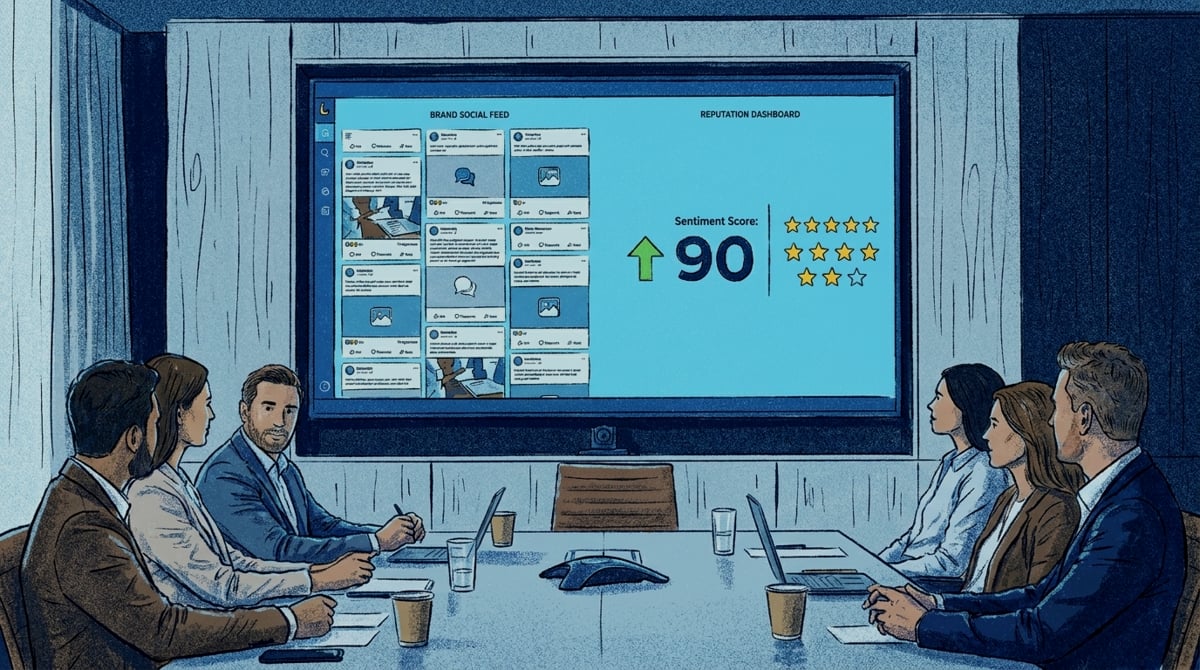
Track the ratio of positive comments to negative feedback over time across review sites, social media channels, and press coverage. The trend matters more than the number. A sentiment score that keeps improving means your online reputation management strategy is working and your brand's online presence is moving in the right direction.
Share of Voice
Are you controlling the conversation in your category? Share of voice measures how much of the total online conversation your brand owns compared to competitors. Brands that have invested in proactive reputation management and social media marketing for more than a decade consistently dominate this metric. A growing share of voice signals a stronger positive image and rising brand authority.
Review Velocity and Average Rating
How fast are Google reviews and positive reviews coming in, and what is the average score trending toward? A sudden drop in review velocity or a spike in negative reviews is an early warning sign that directly affects search engine rankings and customer loyalty.
Branded Search Volume
Growth in branded search volume is one of the strongest proxies for a strong online reputation. When more people are searching for your brand by name, your digital reputation is pulling them in organically and reducing your reliance on paid search engine optimization efforts.
Conversion Rate and CAC
The ultimate test of ORM ROI is whether it moves the business metrics that matter. Track how improvements in review management, customer feedback, and creating positive content correlate with changes in conversion rate and customer acquisition cost over time.
Reputation is only as valuable as the business outcomes it drives. Tying your ORM efforts to these metrics is what separates a strategic program from a box-ticking exercise. The AI tools brands are using for reputation management are also worth understanding as part of this picture.
Let's Address the Obvious
How Often Should We Audit Our Online Reputation?
A full audit should happen at minimum once a quarter. However, real-time monitoring tools should be running continuously so you are never caught off guard between audits. Think of the quarterly audit as your strategic review and the monitoring tools as your early warning system.
How Do You Handle a Negative Review That Is Factually Incorrect?
Respond publicly, calmly, and factually. Do not get defensive or dismissive. Correct the record briefly, offer to resolve the issue offline, and move on. Platforms like Google and Trustpilot also have dispute processes for reviews that violate their policies. Document everything in case you need to escalate.
What Type of Content Is Most Effective for Pushing Down Negative Search Results?
Long-form authoritative content consistently outperforms short posts. Think in-depth guides, case studies, executive thought leadership pieces, and press features on credible third-party publications. The goal is to create enough high-quality indexed content that it naturally occupies the top positions for your branded search terms.
How Should a Brand Respond to a Reputational Crisis on Social Media?
Speed matters but accuracy matters more. Acknowledge the issue publicly within the first few hours, even if you do not have all the answers yet. A simple holding statement that says you are aware and actively looking into it buys time without making promises you cannot keep. Never go silent and never respond with corporate jargon. People can tell.
How Do You Measure Whether Your ORM Efforts Are Actually Working?
Tie your ORM activity directly to the metrics covered earlier in this guide: sentiment score trends, branded search volume growth, review velocity, share of voice, and ultimately conversion rate. If those numbers are moving in the right direction over a sustained period, your strategy is working. If they are flat or declining, something in the execution needs to change.
Reputation Is Not a Marketing Problem. It Is a Business One.
Your brand reputation is being shaped right now, on Google, on review platforms, in AI-generated search results, and in conversations your team may never see. The only real question is how much of that you are actively influencing.
The brands that take ORM seriously are not just protecting themselves from bad press. They are building a compounding asset that drives trust, shortens sales cycles, and makes every other marketing effort work harder.
If you are figuring out where to start or want a sharper strategy behind your ORM efforts, Aikenhouse works with brands on exactly this. Let's talk strategy.
Related ...



Subscribe to our insights


