


Search the site

Drata Alternatives for Automated Security and Compliance
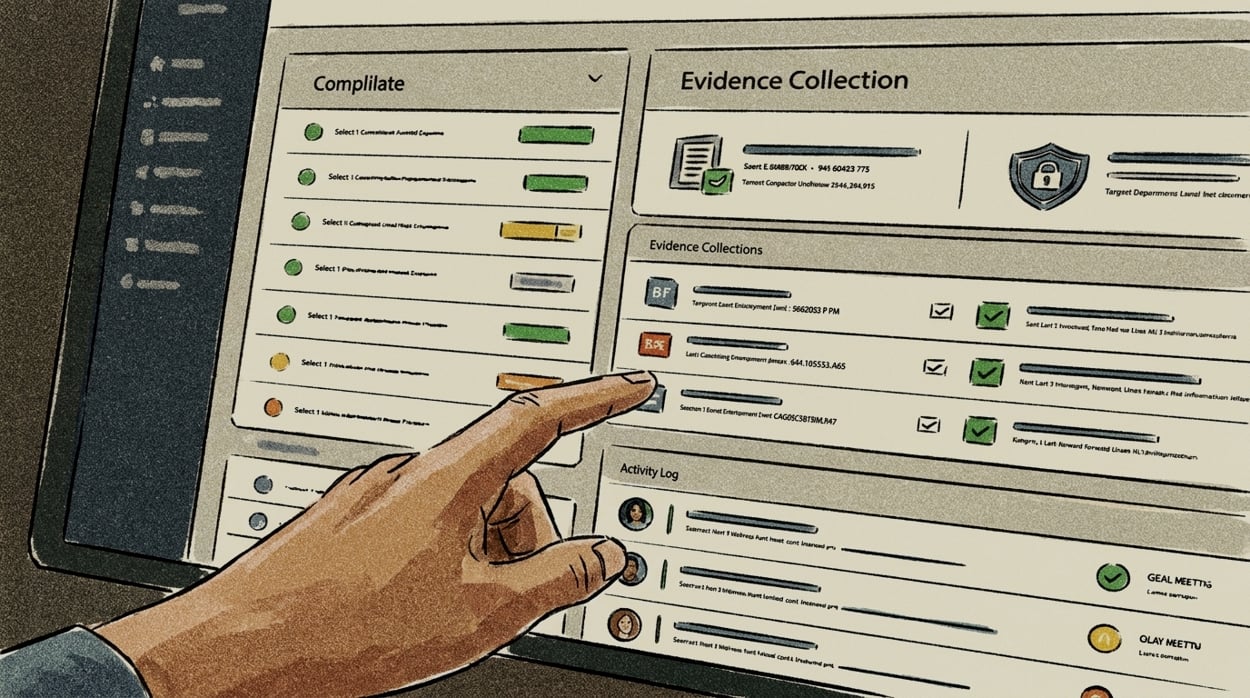
Compliance used to mean scrambling before an audit. Now it runs in the background. Tools like Drata helped shift teams toward automated security and compliance, with continuous monitoring, real-time evidence collection, and audit readiness built into day-to-day operations.
As teams grow, their needs start to vary. As a result, different tools come into the picture that fit different approaches to managing compliance.
Here’s a look at the Drata alternatives teams are using today, and how each one fits depending on your workflow.
What Drata Is Designed to Do
Before looking at alternatives, it helps to understand what Drata is used for.
Drata is a compliance automation platform that helps companies manage security and compliance requirements without relying on manual processes. It connects to your existing tools and systems, automatically collects evidence, and keeps everything aligned with frameworks like SOC 2, ISO 27001, and HIPAA.
Instead of preparing for audits once or twice a year, Drata keeps compliance running continuously. It monitors controls in real time, tracks changes in your systems, and flags anything that may fall out of compliance.
It also centralizes compliance workflows, so teams can manage policies, controls, and audit evidence in one place. This makes it easier to stay organized, reduce manual work, and remain audit-ready throughout the year.
For teams handling sensitive data or working toward certifications, Drata is used to simplify compliance, maintain visibility, and reduce the operational load that usually comes with audits. It works especially well alongside tools used across the business, including HR software systems for large companies, where security, access control, and data protection also play a critical role.
Drata Alternatives Teams Are Actually Using
1. StandardFusion

StandardFusion is a GRC platform that helps organizations manage compliance, risk, and audit processes in a centralized system. It is designed for teams that need structured oversight and control.
Where it stands out:
- Strong focus on governance, risk, and compliance management
- Customizable workflows for audits and controls
- Centralized system for managing policies and risks
A potential drawback: The interface and setup may feel less intuitive for teams looking for a quick start.
Teams that will benefit most: Organizations that need a structured GRC platform with deeper control over compliance and risk processes.
2. Hyperproof

Hyperproof is a compliance operations platform designed for managing ongoing compliance, risk, and audit processes. It focuses on long-term program management rather than just audit readiness.
Where it stands out:
- Strong workflow customization for compliance operations
- Supports ongoing compliance and risk management
- Built for managing multiple frameworks at scale
A potential drawback:
It may require more setup and configuration compared to simpler tools.
Teams that will benefit most:
Enterprise teams that need deeper control over compliance operations and long-term governance.
3. Scytale
Scytale blends compliance automation with expert support, helping teams achieve certifications while maintaining ongoing compliance. It focuses on simplifying complex frameworks through guided processes.
Where it stands out:
- Strong support for multiple frameworks with guided workflows
- Combines automation with expert assistance
- Helps streamline audit preparation and ongoing compliance
A potential drawback: Less flexibility for teams that want a fully self-managed compliance system.
Teams that will benefit most: Teams that want structured guidance alongside automation, especially during initial certifications.
4. Scrut Automation
Scrut Automation is a GRC-focused platform that helps teams manage compliance, risk, and security workflows in one place. It goes beyond audit readiness by adding risk visibility and control management.
Where it stands out:
- Combines compliance automation with risk management
- Centralized view of controls, risks, and policies
- Flexible workflows for growing compliance needs
A potential drawback: The broader feature set may feel more complex for teams focused only on basic compliance.
Teams that will benefit most: Scaling teams that need both compliance automation and risk management in a single platform.
5. Thoropass
Thoropass combines compliance automation with audit support, offering both software and expert guidance. It helps teams prepare for audits while also providing access to auditors within the same platform.
Where it stands out:
- Integrated audit support alongside compliance automation
- Hands-on guidance throughout the certification process
- Centralized platform for managing audits and controls
A potential drawback: The service-based component may not appeal to teams that prefer a fully self-serve platform.
Teams that will benefit most: Teams that want both software and expert support to manage compliance and audits more efficiently.
6. Sprinto
Sprinto focuses on continuous compliance by automating monitoring and control tracking across systems. It is designed to reduce manual work while helping teams stay aligned with multiple frameworks.
Where it stands out:
- Continuous monitoring of controls and compliance status
- Guided workflows that simplify certification processes
- Strong support for multiple compliance standards
A potential drawback: Less flexibility for teams that want highly customized compliance setups.
Teams that will benefit most: Growing teams that want structured, guided compliance without building everything from scratch.
7. Vanta
Vanta is a compliance and security platform designed to automate audit preparation and continuous monitoring. It integrates with a wide range of tools to track compliance status and streamline certification processes.
Where it stands out:
- Wide range of integrations for automated evidence collection
- Fast onboarding for teams preparing for their first audit
- Clear dashboards that make compliance status easy to understand
A potential drawback: Costs can increase as more frameworks, users, or integrations are added.
Teams that will benefit most: Early-stage and growing companies looking for a fast, guided path to SOC 2 and similar certifications.
8. Secureframe
Secureframe is a compliance automation platform that helps companies achieve and maintain certifications like SOC 2, ISO 27001, and HIPAA. It automates evidence collection, monitors controls continuously, and keeps teams audit-ready without manual effort.
Where it stands out:
- Strong automation for evidence collection and control monitoring
- Built-in support for multiple compliance frameworks
- User-friendly interface that reduces setup time
A potential drawback: Customization can be limited for teams with highly specific or complex compliance workflows.
Teams that will benefit most: Startups and growing teams that want a straightforward way to automate compliance and get audit-ready quickly.
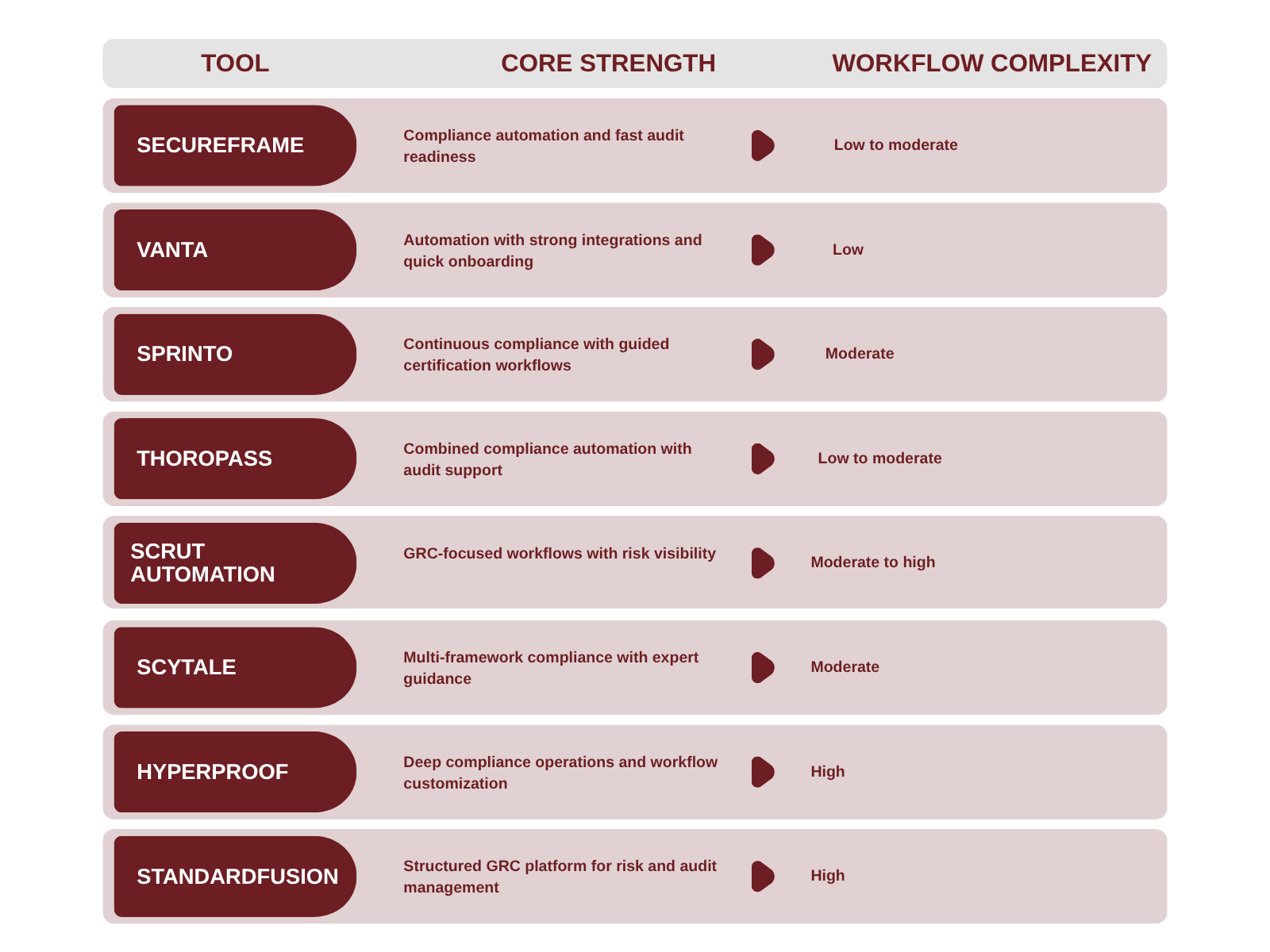
Quick Comparison: Which Tool Fits Your Workflow
What to Look for in a Drata Alternative
Most tools promise automation, but the real difference shows up in how they fit into your day-to-day workflow. These are the areas that actually impact how useful a platform will be over time.
Compliance Automation vs Full GRC
Some tools focus only on audit readiness. They automate evidence collection and help you pass frameworks like SOC 2 or ISO 27001.
Others go further into full GRC, covering risk management, vendor tracking, and governance. That matters once compliance becomes an ongoing process, not just a certification milestone.
Continuous Monitoring vs Point-in-Time Audits
Real value comes from continuous monitoring, not last-minute audit prep.
Modern platforms track controls in real time, flag issues early, and keep your compliance status up to date. This reduces the pressure of audit cycles and helps teams stay consistent instead of reactive.
Integration Depth
Integrations are what make automation work.
The right tool should connect with your existing stack to pull in evidence automatically. Weak integrations bring manual work back into the process, which defeats the purpose of automation.
Usability Across Teams
Compliance is no longer limited to security teams.
Engineering, security, and compliance teams all need visibility, and in many cases, so do non-technical stakeholders. A platform should make it easy to access insights without requiring deep technical knowledge.
Pricing and Scalability
Pricing can change quickly as your needs grow.
Costs often increase based on the number of frameworks, users, and integrations. It is important to choose a tool that scales in a way that matches your growth without becoming difficult to manage.
Choosing the right platform comes down to how well it supports your workflow today and how easily it scales as your compliance needs grow. This becomes even more important in regulated spaces like healthcare, where it highlights how compliance, data protection, and day-to-day operations are closely connected.
The Right Drata Alternative Depends on How Your Team Works
Choosing a tool is less about features and more about how your team handles compliance day-to-day. The right fit should match your pace, your structure, and your approach to managing audits over time.
- Early-stage teams: Focus on speed and simplicity. Choose a compliance platform with strong automation capabilities that reduces manual tasks and fits your existing tech stack. This helps you achieve compliance quickly without a steep learning curve.
- Growing teams: Look for collaboration and automation. A solid compliance solution should support compliance monitoring, real time monitoring, and clear compliance reporting. Strong integration capabilities and features like evidence management and third party risk management help keep teams aligned.
- Enterprise teams: Focus on governance and scale. Look for platforms that support advanced risk management processes, vendor risk assessment, and multiple security frameworks like PCI DSS. Strong audit management features and data governance help maintain compliance across complex environments.
The right choice is the one that supports how your team manages compliance today while staying flexible as your needs evolve.
Compliance Tools Are Only as Good as Your Workflow
Drata made it easier for teams to automate security and compliance, and it remains a strong option for staying audit-ready without manual work. At the same time, teams do not all operate the same way. Some need deeper GRC coverage, others want simpler workflows, and some are focused on scaling compliance across multiple frameworks.
There is no single best tool. The right choice depends on how your team handles compliance day to day, how much structure you need, and how you plan to scale. Start with what fits your workflow. Add complexity only when it supports how your team actually works. The same principle applies across other areas too, as seen in AI tools for HR, where the focus is on improving workflows without adding unnecessary friction.
That is what keeps compliance manageable over time.


Subscribe to our insights


